5. Using Python on macOS 
This document aims to give an overview of macOS-specific behavior you should know about to get started with Python on Mac computers. Python on a Mac running macOS is very similar to Python on other Unix-derived platforms, but there are some differences in installation and some features.
There are various ways to obtain and install Python for macOS. Pre-built versions of the most recent versions of Python are available from a number of distributors. Much of this document describes use of the Pythons provided by the CPython release team for download from the python.org website 。见 Alternative Distributions for some other options.
5.1.
Using Python for macOS from
python.org

5.1.1. 安装步骤 
For
current Python versions
(other than those in
security
status), the release team produces a
Python for macOS
installer package for each new release. A list of available installers is available
here
. We recommend using the most recent supported Python version where possible. Current installers provide a
universal2 binary
build of Python which runs natively on all Macs (Apple Silicon and Intel) that are supported by a wide range of macOS versions, currently typically from at least
macOS 10.13 High Sierra
on.
The downloaded file is a standard macOS installer package file (
.pkg
). File integrity information (checksum, size, sigstore signature, etc) for each file is included on the release download page. Installer packages and their contents are signed and notarized with
Python Software Foundation
Apple Developer ID certificates to meet
macOS Gatekeeper requirements
.
For a default installation, double-click on the downloaded installer package file. This should launch the standard macOS Installer app and display the first of several installer windows steps.
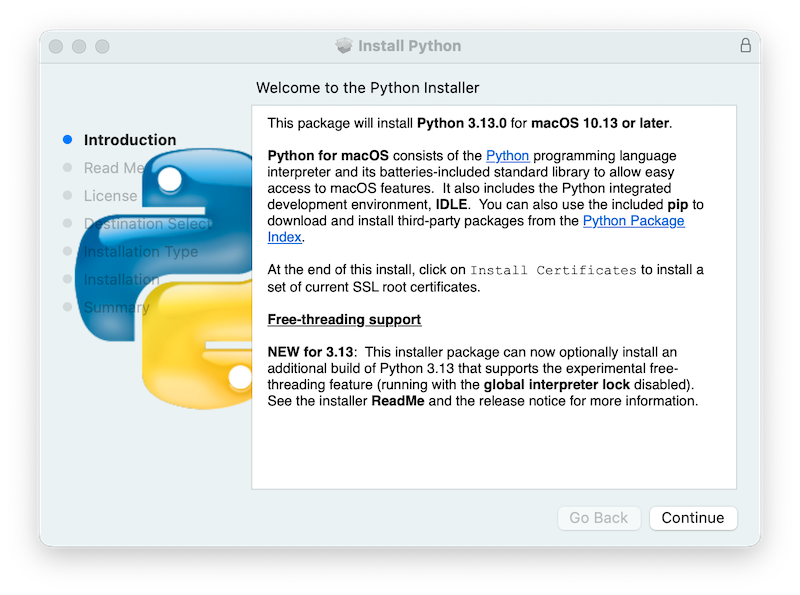
Clicking on the
Continue
button brings up the
Read Me
for this installer. Besides other important information, the
Read Me
documents which Python version is going to be installed and on what versions of macOS it is supported. You may need to scroll through to read the whole file. By default, this
Read Me
will also be installed in
/Applications/Python 3.13/
and available to read anytime.
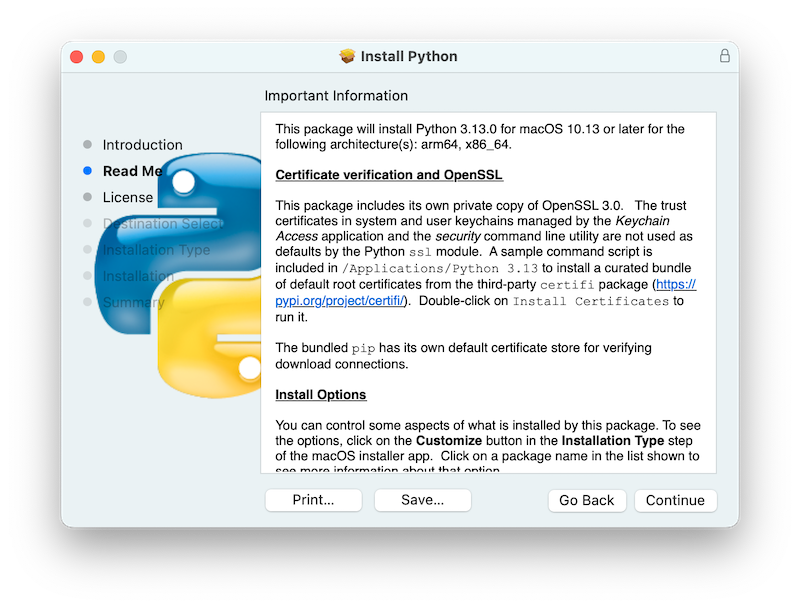
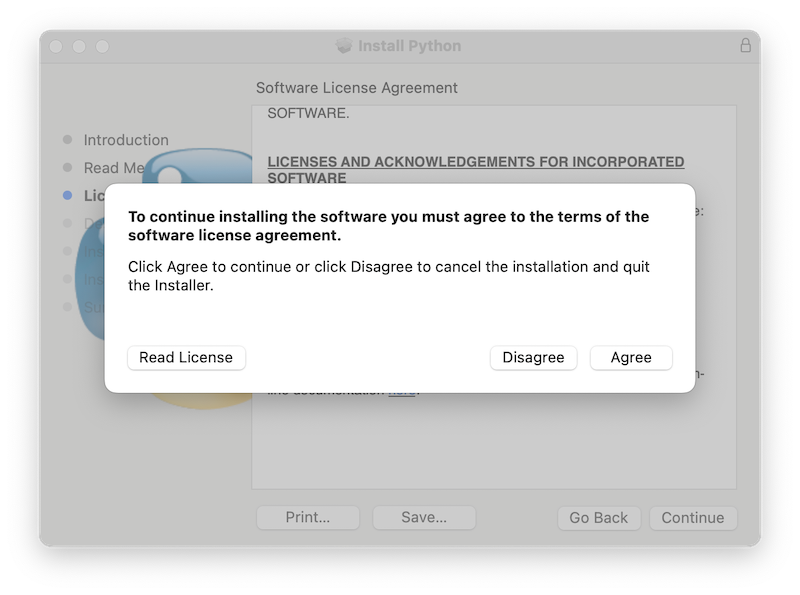
Clicking on Continue proceeds to display the license for Python and for other included software. You will then need to Agree to the license terms before proceeding to the next step. This license file will also be installed and available to be read later.
After the license terms are accepted, the next step is the Installation Type display. For most uses, the standard set of installation operations is appropriate.
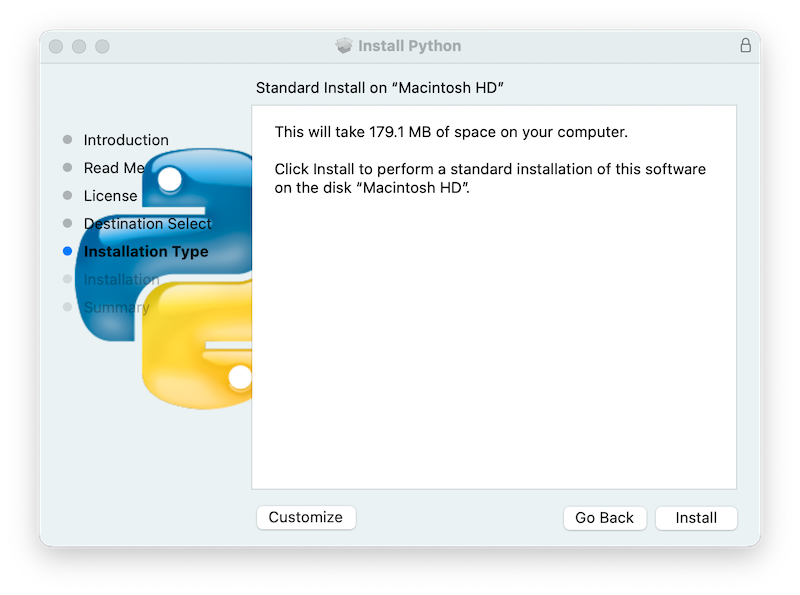
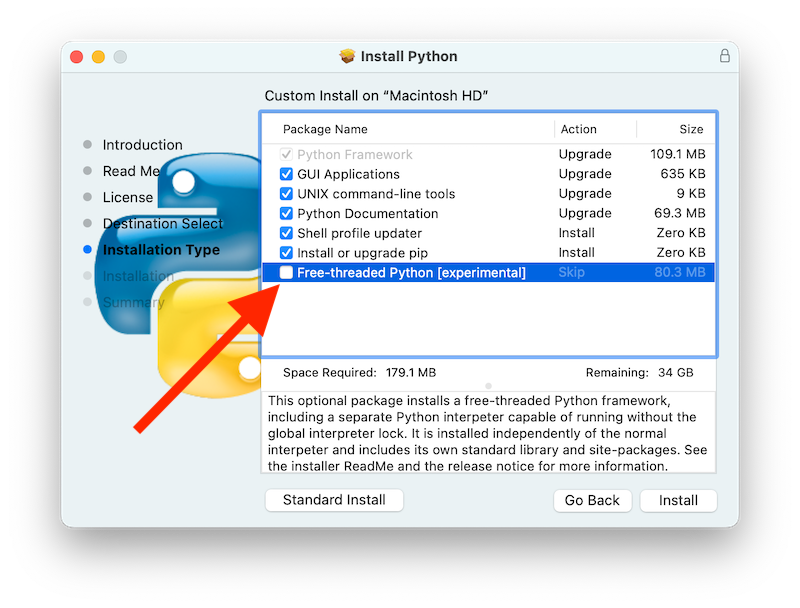
By pressing the Customize button, you can choose to omit or select certain package components of the installer. Click on each package name to see a description of what it installs. To also install support for the optional experimental free-threaded feature, see Installing Free-threaded Binaries .
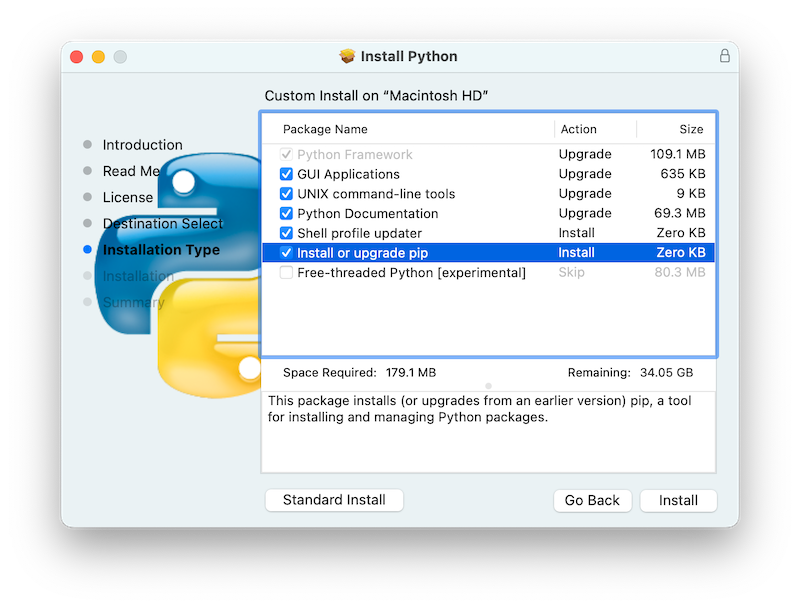
In either case, clicking
安装
will begin the install process by asking permission to install new software. A macOS user name with
Administrator
privilege is needed as the installed Python will be available to all users of the Mac.
When the installation is complete, the Summary window will appear.
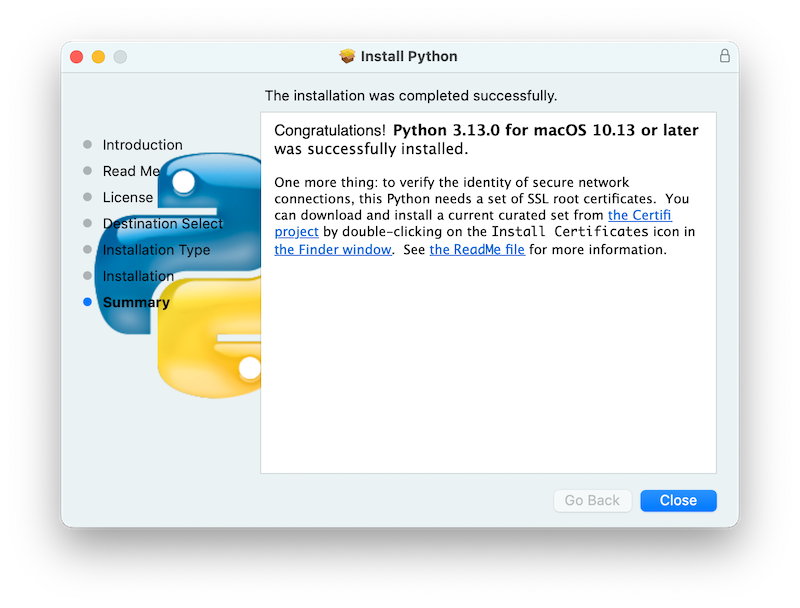
Double-click on the
Install Certificates.command
icon or file in the
/Applications/Python 3.13/
window to complete the installation.
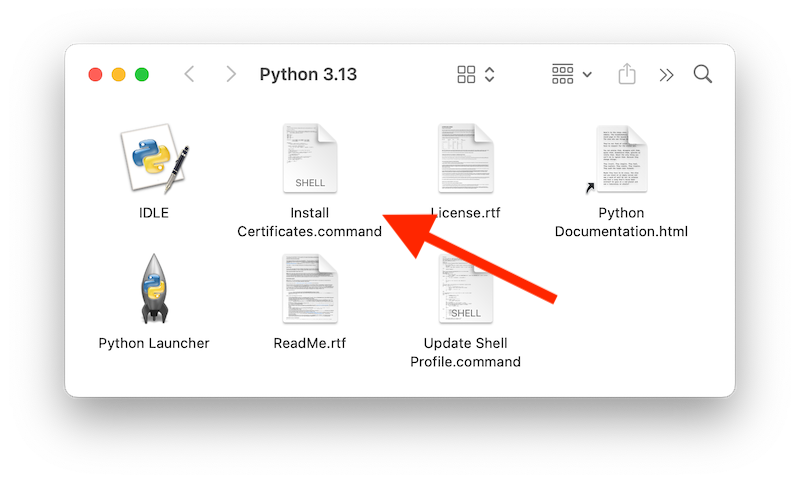
This will open a temporary Terminal shell window that will use the new Python to download and install SSL root certificates for its use.
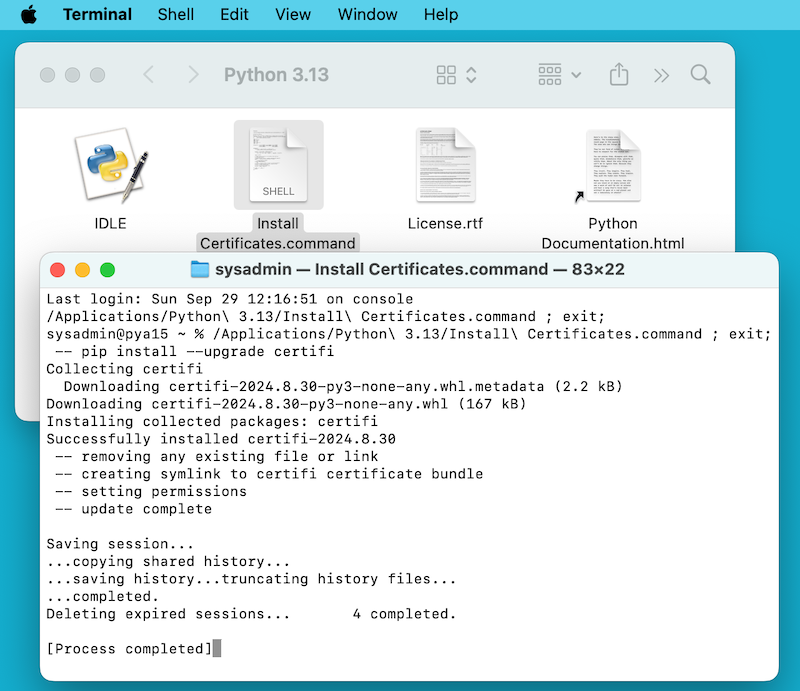
若
Successfully installed certifi
and
update complete
appears in the terminal window, the installation is complete. Close this terminal window and the installer window.
A default install will include:
-
A
Python 3.13folder in yourApplicationsfolder. In here you find IDLE , the development environment that is a standard part of official Python distributions; and Python Launcher , which handles double-clicking Python scripts from the macOS Finder . -
A framework
/Library/Frameworks/Python.framework, which includes the Python executable and libraries. The installer adds this location to your shell path. To uninstall Python, you can remove these three things. Symlinks to the Python executable are placed in/usr/local/bin/.
注意
Recent versions of macOS include a
python3
command in
/usr/bin/python3
that links to a usually older and incomplete version of Python provided by and for use by the Apple development tools,
Xcode
或
Command Line Tools for Xcode
. You should never modify or attempt to delete this installation, as it is Apple-controlled and is used by Apple-provided or third-party software. If you choose to install a newer Python version from
python.org
, you will have two different but functional Python installations on your computer that can co-exist. The default installer options should ensure that its
python3
will be used instead of the system
python3
.
5.1.2. How to run a Python script 
There are two ways to invoke the Python interpreter. If you are familiar with using a Unix shell in a terminal window, you can invoke
python3.13
or
python3
optionally followed by one or more command line options (described in
命令行和环境
). The Python tutorial also has a useful section on
using Python interactively from a shell
.
You can also invoke the interpreter through an integrated development environment. IDLE is a basic editor and interpreter environment which is included with the standard distribution of Python. IDLE includes a Help menu that allows you to access Python documentation. If you are completely new to Python, you can read the tutorial introduction in that document.
There are many other editors and IDEs available, see 编辑器和 IDE 了解更多信息。
To run a Python script file from the terminal window, you can invoke the interpreter with the name of the script file:
python3.13myscript.py